Navigate
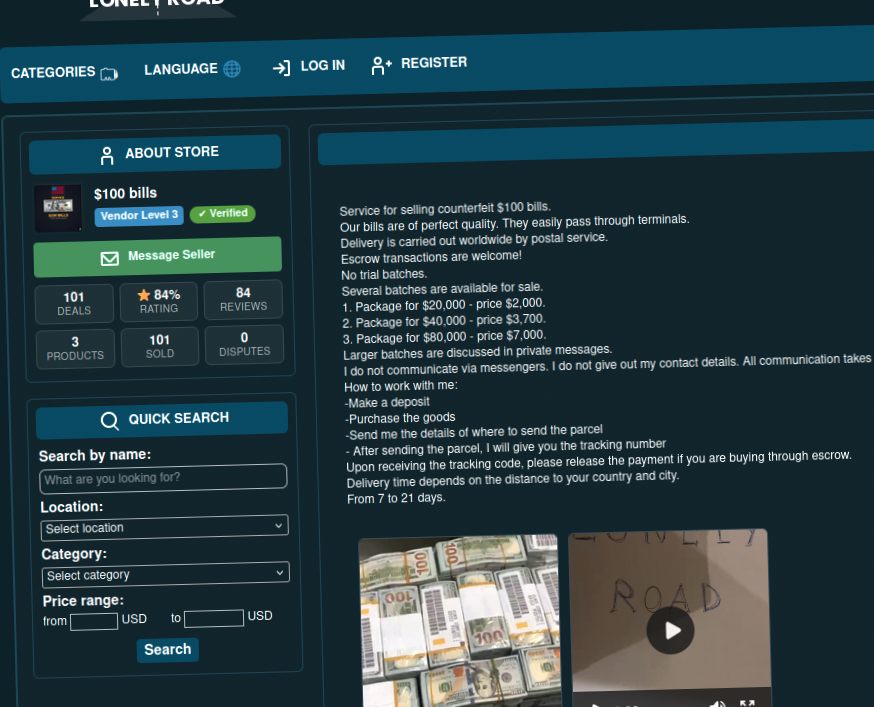
Derek H., a 29-year-old individual living in Denver, believed he had discovered a guaranteed method to exchange counterfeit currency for legitimate cash. In January 2025, he obtained 40 counterfeit $100 bills through an underground online marketplace, investing $1,200 in cryptocurrency. The seller claimed that these bills were of superior quality, nearly impossible to differentiate from real money, featuring UV protection, magnetic strips, and watermarks to avoid detection.
His approach was simple: deposit the counterfeit bills into ATMs that accept cash, boost his bank balance, and withdraw the money before anyone caught on. At first, things seemed to go well; the first two machines accepted his fraudulent notes, allowing him to add $800 to his account.
However, problems arose with later transactions, causing the bank to flag his deposit. In the end, his account was frozen by the bank, and three weeks later, he was arrested by the U.S. Secret Service. This incident highlights the strict financial monitoring systems and the considerable dangers linked to counterfeit currency.
1. 1. The Purchase and the Setup
Derek spent $1,200 in cryptocurrency to buy fake dollars from a darknet vendor. The order was for 40 notes from the 2009 series, each a counterfeit $100 dollar bill.
He was not hunting for prop money dollars or novelty prints. He wanted fake money dollar bills that could survive a machine scan. The listing promised the full package — UV reaction, magnetic ink, and a visible watermark.
Before you ever consider a fake money site, understand what Derek ignored. A bill that passes one check can still fail the next, and every deposit leaves a digital trail that no watermark can hide.
2. 2. The ATM Run and the Breakdown
At first, Derek's efforts to deposit the fraudulent cash appeared to be successful as he used two ATMs, obtaining a total of $800. Unfortunately, his luck changed when the third ATM refused one of the bills, creating a significant hurdle. Although the fourth machine accepted a note, it raised a warning for additional examination, representing a pivotal moment in his plan.
The next day, Derek realized that his bank had restricted access to his account. Merely three weeks later, he found himself in the custody of law enforcement. This chain of events illustrates how swiftly initial successes can lead to dire repercussions.
3. 3. What the Bills and Prices Looked Like
Here’s a breakdown of the numbers from the source showing what Derek paid versus what he tried to move.
| What was involved | What happened |
|---|---|
| Price per fake note | $30 |
| Bundle size | 40 fake $100 bills |
| First couple of ATM tries | $800 went through |
| What he paid | $1,200 in crypto |
| Issue year | 2009 |
| Next machine | Bill came back with an error |
| Machine after that | Took it but left it pending review |
| What happened to the account | Frozen the next morning |
| When they got him | Three weeks later by the U.S. Secret Service |
The fake dollar price here was $30 per note. That is far above what typical prop money dollars cost and far below what a real $100 bill is worth. The premium was supposed to buy passable security features, but it mostly bought a faster route to a frozen account.
4. 4. Why the Bank Unraveled It
Banks don’t simply observe cash; they analyze trends. When numerous deposits of 100-dollar counterfeit bills occur in the same account over a brief period, it sets off alarms, even if the initial notes are accepted without issue.
A single ATM rejecting a bill raises a concern. If another ATM flags a pending review, that adds to the scrutiny. In Derek's case, the freeze happened before he could turn the credited amount into cash or transfers.
Anyone interested in acquiring fake bills should recognize that ATMs aren’t the only hurdle. The account's transaction history, timing of deposits, and the quality of the notes are all scrutinized collectively.
5. 5. The Smaller Bills Problem
Derek went for hundreds, but the same logic applies to lower denominations. People hunting counterfeit $20 dollar bills or looking to buy counterfeit 20 dollar bills often think smaller notes attract less attention.
That is only partly true. A stack of fake 20s can still trip sensors, and repeated cash deposits raise the same red flags. Some buyers also search for realistic fake money australia because they assume foreign jurisdiction adds distance. The banking problem does not disappear just because the note design changes.
Bottom Line
Derek's scheme collapsed not because every ATM rejected him, but because the system connected the dots. Two accepted deposits did not erase a rejected note and a pending review.
The fake money darknet listing sold confidence more than security. The features sounded convincing — UV, magnetic strip, watermark — yet the operational part failed within a day. A frozen account and a Secret Service arrest ended the loop before any clean withdrawal could happen.
We see the same lesson every time. The real filter is not the first scan, it is the audit trail that starts the moment a deposit hits the account.
Common questions
How much did Derek pay for the fake hundreds?
He paid $1,200 in cryptocurrency for 40 counterfeit $100 dollar bills, which works out to a fake dollar price of $30 per note.
Did any ATM accept the counterfeit bills?
Yes. The first two ATMs accepted the notes and credited $800 to his account before a third machine rejected a bill and a fourth flagged a transaction as pending review.
What happened after the bank froze the account?
The account was frozen the next morning, and three weeks later the U.S. Secret Service arrested Derek.
Why do people look for counterfeit $20 dollar bills instead of hundreds?
Some assume smaller notes draw less attention, but repeated cash deposits still trigger review flags even when someone tries to buy counterfeit 20 dollar bills.
Sources
- 1. Derek H.'s Dark Web Misadventure: Counterfeit Dollars
- 2. U.S. Citizen Led an International Counterfeit Currency Operation Headquartered in Uganda | United States Secret Service
- 3. Vermilion County Man Sentenced to Five and a Half Years in Prison for Counterfeiting and Violating Supervised Release | United States Secret Service
- 4. Tennessee Man Pleads Guilty in Ugandan-Made Counterfeit Currency Scheme | United States Secret Service
- 5.